Home › Commercial Asphalt Resurfacing & Overlays
Precision Asphalt Austin provides commercial asphalt resurfacing in Austin, TX for aging parking lots and drive lanes. We repair failures, adjust grades, and install smooth overlays that restore appearance and extend pavement life. Overlays are a cost effective alternative to total reconstruction for many commercial properties.
Precision Asphalt Austin provides professional commercial asphalt resurfacing throughout Austin, TX, Texas and the surrounding area. Our licensed, insured crew delivers safe, clean, on-time work with a free estimate before anything begins. Call (737) 530-7711 or request your free quote.
Commercial Asphalt Resurfacing for Austin Properties
Commercial asphalt resurfacing gives worn pavement a new driving surface without the cost and disruption of full reconstruction. For many Austin facilities, this is the most practical way to extend pavement life, improve appearance, and correct surface problems. Precision Asphalt Austin focuses specifically on commercial sites, including office parks, retail centers, HOAs, industrial yards, schools, and churches.
In Central Texas, UV exposure, heavy pickup traffic, and occasional flooding during storms are the main enemies of asphalt. Surfaces oxidize, lose oils, and become brittle, which leads to cracking and raveling. When the base is still structurally sound but the top layer is failing, commercial asphalt resurfacing is usually the right solution. We evaluate your lot or roadway to determine whether an asphalt overlay, mill and overlay, or targeted repairs plus overlay will give you the best long term result.
Precision Asphalt Austin does not treat resurfacing as a cosmetic quick fix. Our goal is to correct underlying issues so you do not pay for a new surface that fails early. That means investigating drainage, load patterns, and subgrade conditions specific to your site in Austin before we recommend a resurfacing plan.
How the Commercial Asphalt Resurfacing Process Works
A professional overlay project follows a sequence of steps that directly affects how long your investment will last.
1. Detailed site assessment: We walk and drive the entire pavement, mark structural failures, drainage problems, and soft areas, and document where heavy vehicles track. We also check transitions at sidewalks, entrances, and loading docks so new elevations will not create trip hazards or drainage issues.
2. Repairs before resurfacing: Any area with base failure, pumping, or wide alligator cracking gets full depth removal and replacement rather than just being covered. If this step is skipped, those failures will quickly reflect through the new overlay. We also clean and fill larger cracks and patch utility cuts so the surface is uniform.
3. Surface preparation: Using power brooms and industrial blowers, we remove dirt, sand, and vegetation from the existing asphalt. In Austin, we frequently encounter decomposed granite and caliche fines tracked from nearby jobsites. These contaminants must be removed so the new asphalt can bond properly.
4. Tack coat application: We spray a uniform asphalt emulsion tack coat over the prepared surface. This acts like glue between the old pavement and the new lift. Areas with polished, oxidized asphalt or concrete tie-ins may receive a heavier or specialty tack to ensure bonding.
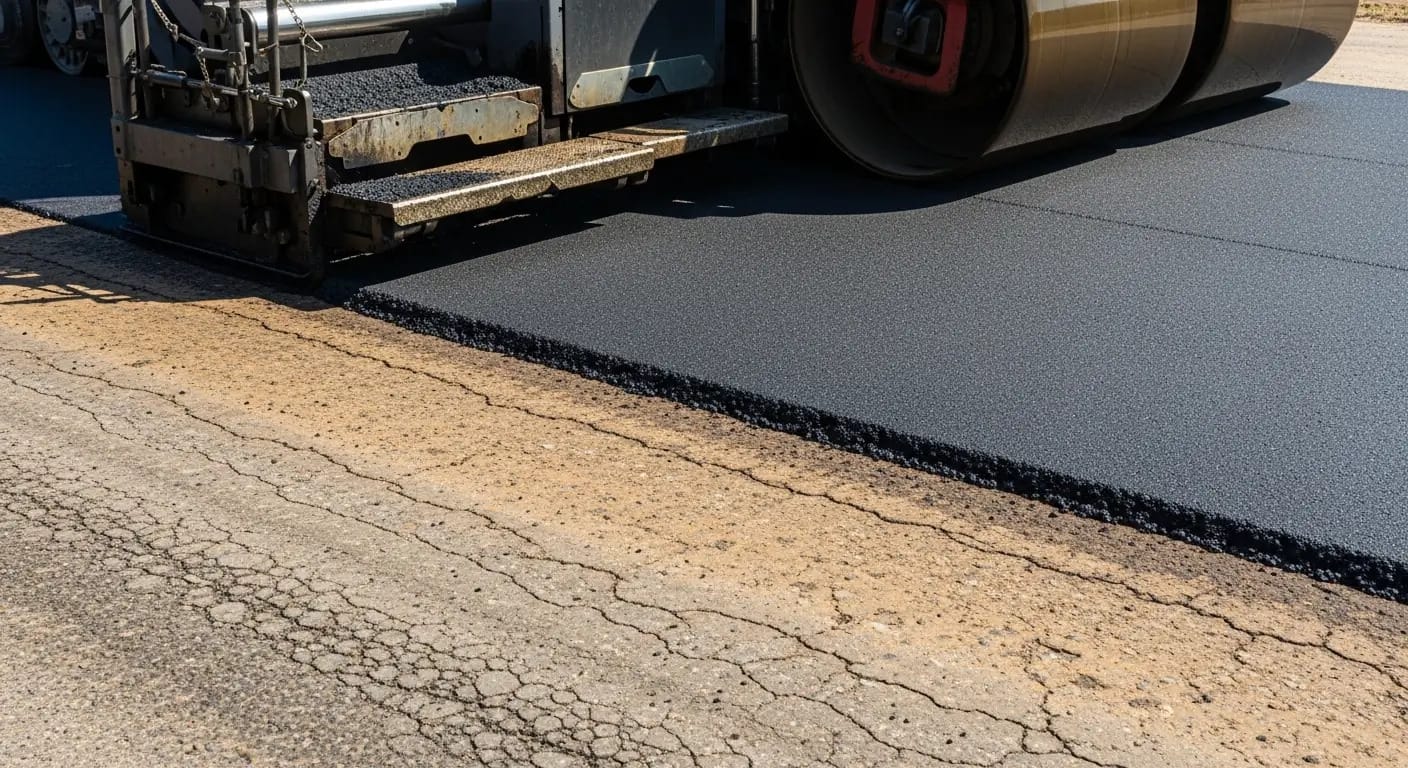
5. Placement of the overlay: Hot mix asphalt is delivered from local plants, then spread with a self-propelled paver to a specific compacted thickness, typically 1.5 to 2 inches for most commercial lots. Precision Asphalt Austin uses a paving machine for overlays wherever access allows, which produces a consistent mat and smoother ride.
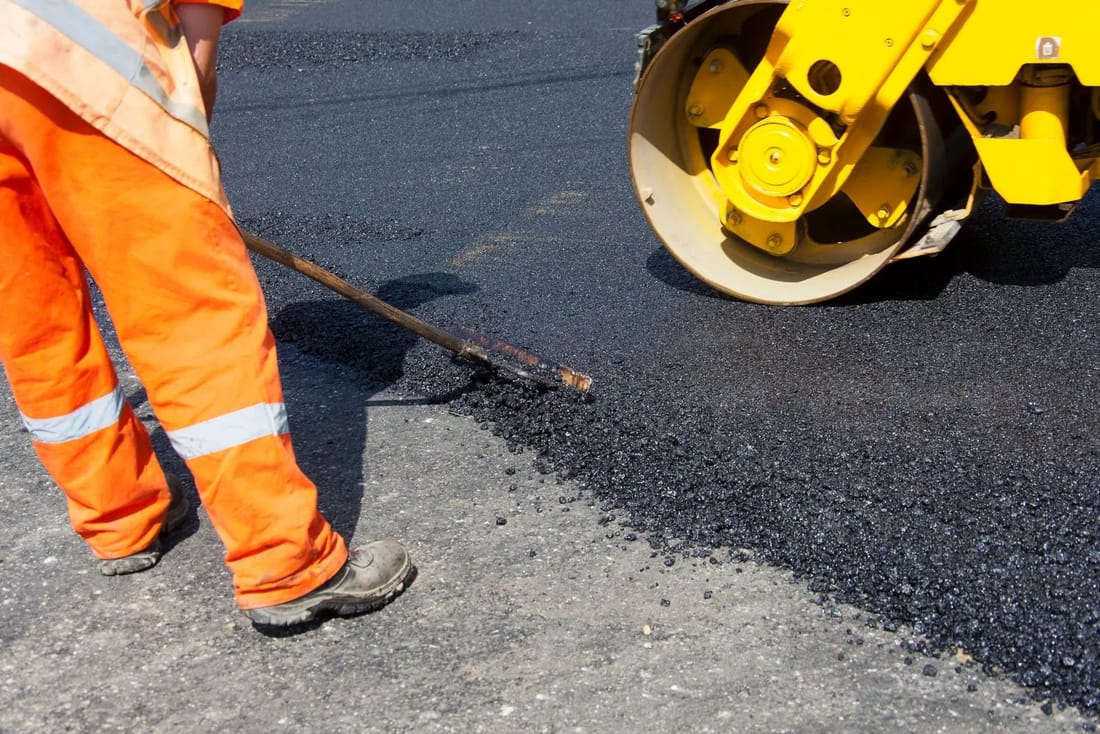
6. Compaction: Steel and pneumatic rollers compact the mix to proper density. We monitor temperatures and rolling patterns so joints are tight and the mat is sealed. Proper compaction is the single biggest factor in how many years you will get from your new surface.
7. Curing and striping: After the mix cools and reaches stability, we re-stripe, re-stencil ADA markings, and reinstall wheel stops or signage. In most cases, commercial traffic can return within 24 hours, with phasing planned to keep your business open.
Material Options and Overlay Types for Austin Conditions
Not all overlays are identical. Precision Asphalt Austin recommends mix designs and overlay types that match your traffic and environment.
For standard commercial parking lots, we typically use a dense graded hot mix similar to TXDOT Type D or equivalent commercial mix from Austin area plants. This provides a good balance of smoothness and durability for cars and light trucks. For drive lanes exposed to frequent garbage trucks or delivery vehicles, we may specify a coarser or higher stone content mix that holds up better under turning and braking loads.
On steeper grades or approaches to loading docks, we can adjust the design to improve skid resistance during rain. Austin storms can bring intense downpours, and we want your surface to shed water and maintain friction. In some cases, we recommend a slightly thicker overlay or a leveling course to correct rutting before the final wearing course is placed.
Overlay type also matters. A simple overlay (placing new asphalt directly on the existing surface) is appropriate when the pavement is sound and elevations can be raised slightly without affecting drainage or door thresholds. A mill and overlay (grinding off a set thickness before paving) is better where we need to maintain existing elevations, adjust slope for drainage, or remove surface irregularities.
We also perform localized asphalt leveling in rutted drive lanes or at settled trenches before the main overlay. This prevents “telegraphing” of imperfections into the final surface and improves overall ride quality.
What Drives the Cost of Commercial Asphalt Resurfacing
Property managers and owners in Austin often ask why resurfacing quotes vary so widely. Several real factors drive cost on a commercial asphalt resurfacing project.
Existing pavement condition: If the lot has limited structural failures and cracking, we can perform minimal base repairs. If we find extensive alligator cracking, pumping, or subgrade issues, more full depth replacement is required before overlay. Those repairs add cost but prevent premature failure.
Thickness and scope: A light 1 inch overlay on a small parking lot costs far less than a 2 inch overlay with extensive milling on a large retail center. We size the overlay thickness based on traffic loads, existing section, and your longevity expectations. Heavier truck traffic usually needs a thicker lift.
Milling and elevation work: Any time we must mill to maintain door thresholds, tie into concrete, or correct drainage, the project cost increases. Milling produces a better finished product, but it adds labor, equipment, and haul-off costs.
Access and phasing: Active retail centers along corridors like I-35, US 183, or in dense mixed use developments require night work or complex phasing so tenants can remain open. That means more mobilizations, traffic control, and coordination, which affects price.
Asphalt and fuel markets: Asphalt is a petroleum product, and pricing in Austin is influenced by regional refinery output and haul distance from the plant to your site. Precision Asphalt Austin times production and trucking to minimize wasted material, which helps control your total cost.
Our proposals separate out key line items, such as milling, base repairs, overlay, striping, and ADA upgrades, so you can see exactly where your dollars go and compare options clearly.
Common Pavement Problems We Solve With Overlays
Most of the commercial asphalt resurfacing projects we perform in Austin start with a specific pain point for the owner.
Raveling and surface oxidation: Gray, rough asphalt with loose aggregate is a sign the binder has oxidized. While sealcoat can slow this trend early, once the surface starts losing fines, an overlay is often the only way to restore a durable wearing course.
Widespread but moderate cracking: When you see many interconnected cracks but the surface is not yet breaking apart into pieces, resurfacing after targeted crack repair can stop water intrusion and reset the clock before the base is damaged.
Ruts in drive lanes: At grocery stores, industrial facilities, and multifamily properties, repetitive truck traffic often creates wheel path ruts. We correct these by milling or leveling, then installing a thicker or stronger overlay mix in the affected lanes.
Poor drainage and ponding: In older Austin lots built before current standards, we often find birdbaths that collect water for days after a storm. During resurfacing, we can adjust slopes by fine grading, limited milling, or strategic build up so water drains to inlets or edges instead of soaking into the pavement.
Patchwork from old utility cuts: Multiple trench patches create a bumpy, unprofessional appearance and weak points in the pavement. A uniform overlay across the affected area ties everything together, improves ride quality, and reduces ongoing patch repairs.
Planning, Phasing, and Traffic Control for Busy Austin Sites
Commercial asphalt resurfacing must be planned around your business operations. Precision Asphalt Austin works with property managers, facility engineers, and tenants in Austin to phase work so access is maintained and revenue is not disrupted.
For retail centers and restaurants, we typically divide the lot into sections. We close and resurface one phase at a time, maintain drive lanes for through traffic, and ensure ADA spaces and primary entries remain accessible as much as possible. For medical offices and schools, we often schedule the work during breaks, evenings, or weekends to reduce impact.
Traffic control is tailored to the site. We set up clear barricades, cones, signage, and flaggers where needed so customers and delivery drivers understand new traffic patterns. Our crews coordinate with your waste haulers, vendors, and delivery companies so heavy trucks are not arriving on freshly placed asphalt.
Communication is just as important as the physical work. Before we start, we provide a simple map and schedule you can share with tenants or employees. During the project, a site supervisor is available to respond quickly if conditions change or you need adjustments.
What Austin Property Owners Should Ask Before Hiring
Before you commit to a commercial asphalt resurfacing contractor in Austin, it is worth asking a few specific questions that can save you from expensive problems later.
Ask how they will evaluate whether your lot is a candidate for overlay versus full reconstruction. A contractor who proposes a blanket overlay without checking for base failures or drainage issues is likely more focused on speed than durability.
Find out whether they plan to perform milling, leveling, or base repairs, and where. Ask them to mark those areas on site with you so you understand the difference between cosmetic work and structural repairs. Confirm what overlay thickness they are basing their price on, and whether that measurement is compacted thickness, which is what truly matters.
Request information on the specific mix design and tack coat they will use, especially if you have significant truck traffic or concrete tie-ins. Inquire about how they plan to phase the work and maintain access for your tenants, emergency vehicles, and deliveries.
Precision Asphalt Austin is straightforward about these details in writing. Our focus is on long term performance, not the lowest short term number. We design each commercial asphalt resurfacing and overlay project around your site conditions, your budget range, and how you need your property to function in the years ahead.