Home › Commercial Gravel-to-Asphalt Conversions
Upgrade dusty, muddy surfaces with commercial gravel to asphalt conversions in Austin, TX. We regrade, compact, and pave lots and drives to create clean, low maintenance asphalt surfaces.
Precision Asphalt Austin provides professional commercial gravel to asphalt throughout Austin, TX, Texas and the surrounding area. Our licensed, insured crew delivers safe, clean, on-time work with a free estimate before anything begins. Call (737) 530-7711 or request your free quote.
Turn your gravel lot into a durable asphalt surface that actually works
If you are tired of dust, ruts, and mud every time it rains, a commercial gravel to asphalt conversion can completely change how your property functions. Precision Asphalt Austin helps businesses across the Austin area turn loose aggregate lots into smooth, striped asphalt that handles traffic and Texas weather.
We specialize in working on active commercial properties. That means we plan your project around business hours, deliveries, and tenant access so you stay operational while the conversion is underway. Whether you manage an office park off MoPac, a retail center in South Austin, or an industrial yard near the airport, we build a plan that fits how your site really runs day to day.
A proper conversion is more than just paving over gravel. The existing base has to be evaluated, corrected, and compacted to handle Central Texas clay soils, sudden storms, and heavy vehicle loads. When we visit your site, we are looking at traffic patterns, drainage paths, soft spots in the gravel, and utility access so your new asphalt holds up instead of failing in the first couple of years.
How a commercial gravel to asphalt conversion actually works
Every property is different, but most commercial gravel to asphalt projects in Austin follow a similar sequence.
1. Site evaluation and design: Precision Asphalt Austin starts by walking the entire gravel area with you. We look for low spots that hold water, areas where trucks track in from the street, and edges that will need containment. We measure slopes and check where stormwater currently flows so the new asphalt surface does not create ponds against buildings or at entrances.
2. Grading and base correction: Many gravel lots look level from a distance but have uneven thickness and soft areas. We regrade the surface with skid steers and motor graders, cutting high spots and filling low areas. In weaker sections we remove contaminated or thin gravel and replace it with new road base or crushed limestone, then compact it in controlled lifts using vibratory rollers to hit the density needed for commercial traffic.
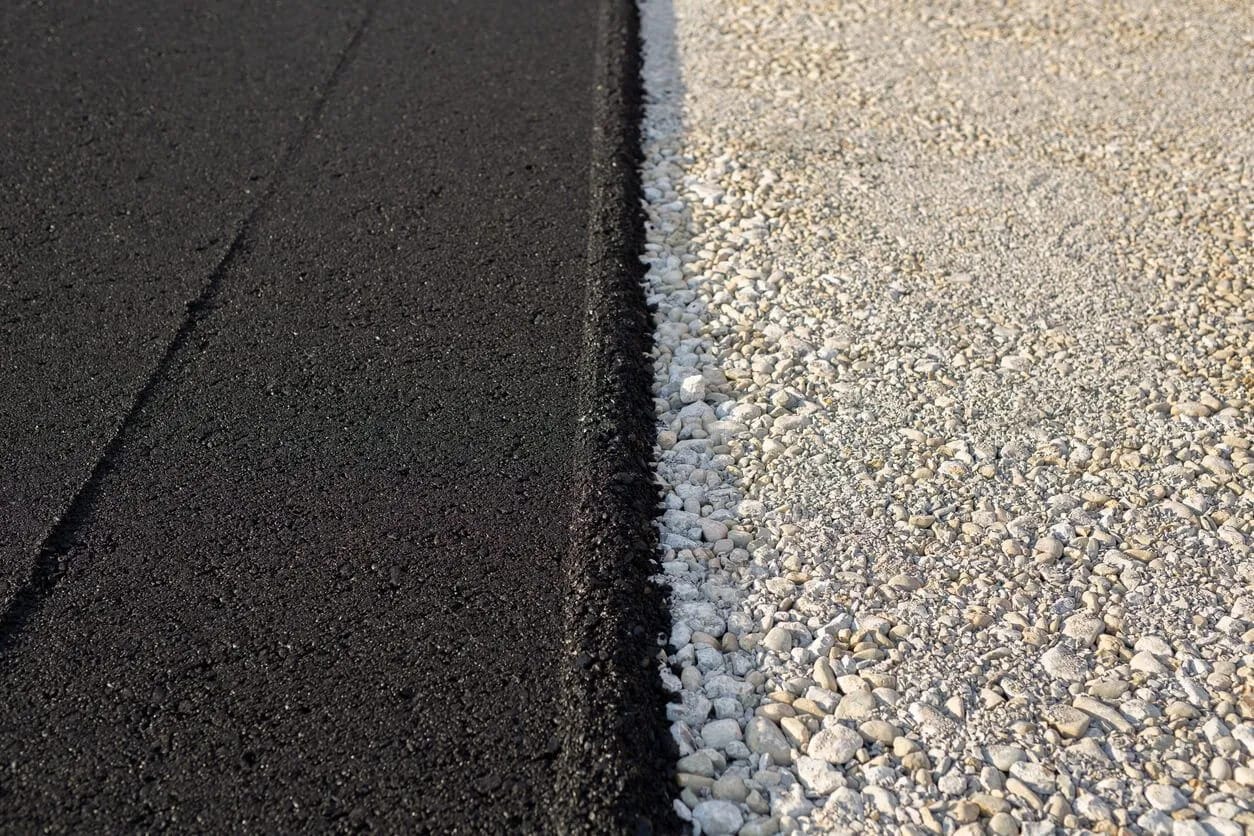
3. Edge control and transitions: To keep the new asphalt from unraveling at the sides, we often install concrete ribbon curbs, asphalt curbs, or compacted shoulders. At entrances, loading docks, and dumpster pads we design transitions to concrete or existing pavement so forklifts and trucks do not break the edge.
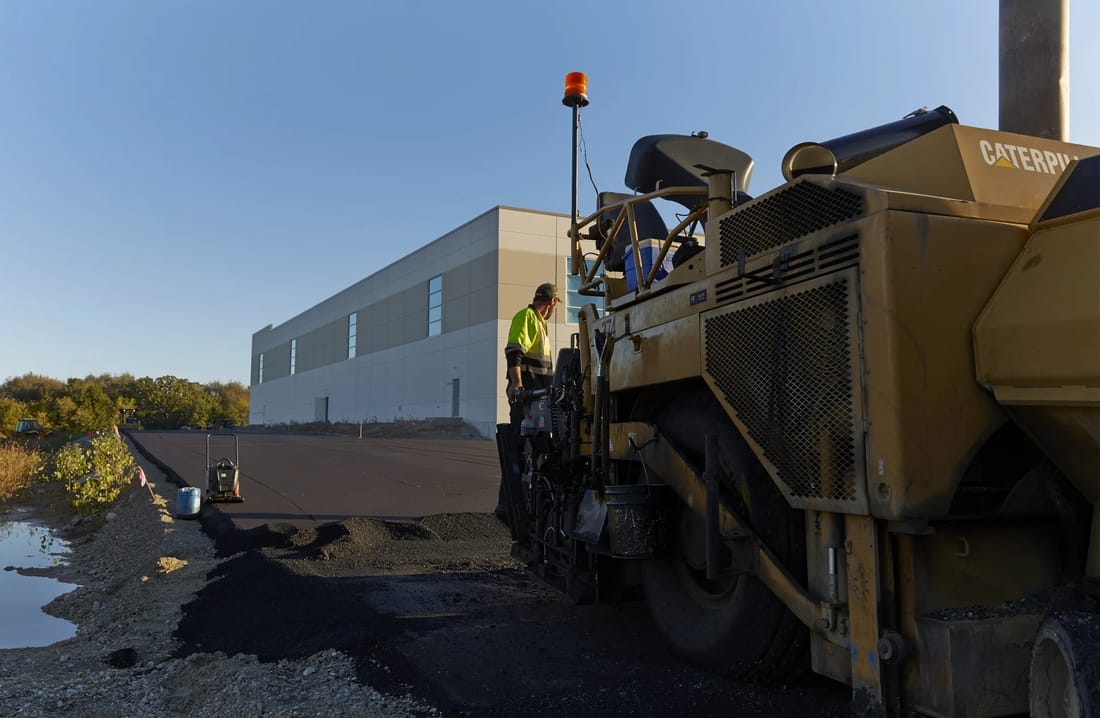
4. Asphalt installation: For most commercial gravel to asphalt conversions, we install a binder course asphalt layer for strength, then a finer surface course for smoothness. Thickness is based on use. Light car parking may get 3 to 4 inches total, while service roads or truck areas may need 5 to 6 inches or more. All layers are machine laid where possible and compacted hot for a tight, long lasting mat.
5. Striping and safety features: Once the asphalt cures, we lay out parking stalls, ADA accessible spaces, fire lanes, and directional arrows. If the site needs wheel stops, bollards, or signage, we can add those so the converted lot is ready for customers and deliveries, not just drivable.
Design and material choices that matter for Austin properties
Austin has a mix of expansive clay, limestone, and fast changing weather, so a one size fits all section of asphalt on top of gravel will not last. Precision Asphalt Austin designs every commercial gravel to asphalt conversion around how your property is actually used and what is underneath the existing rock.
If your lot mostly serves passenger vehicles, a dense graded hot mix with a 2 inch surface course over a 2 inch base course on a solid compacted base is usually enough. For apartment complexes and retail centers where garbage trucks and delivery trucks turn frequently, we may recommend thicker sections or concrete pads at dumpster areas and tight turning points, with asphalt connecting everything.
Drainage is a major design decision. On gravel, water seeps through and disappears, even if slowly. Once you go to asphalt, that water has to be directed. We may build in gentle cross slopes (often 1.5 to 2 percent) toward inlets or the street, add swales along the perimeter, or install small valley gutters so heavy Hill Country storms do not pool in traffic lanes. In older parts of Austin with minimal storm infrastructure, we pay special attention to where runoff leaves your property so you do not create erosion on neighboring lots.
Color and surface texture matter too. Dark asphalt can get hot, so in tight courtyards or pedestrian heavy areas we sometimes recommend a finer surface mix that cools more quickly and sweeps cleanly. If your business needs a specific traffic flow, we plan internal lanes and striping so customers naturally follow the pattern instead of cutting across rows.
Costs, timelines, and common problems with gravel to asphalt work
Owners usually ask two questions first: how much will it cost and how long will it take. The honest answer is that both are driven mostly by base condition, drainage needs, and traffic loading.
Base condition: A well maintained gravel lot with several inches of compacted aggregate is less expensive to convert than a lot with thin rock over clay and potholes that turn into mud after every rain. If we can use most of your existing base, costs stay down. If we find pumping subgrade or underground water issues, we may need undercutting, geotextile fabric, or added base rock, which adds time and material.
Drainage and layout: If your current gravel area already sheds water away from buildings and has no standing water, the conversion is straightforward. If water currently runs toward doorways or docks, we may need regrading or added drainage structures. Correcting drainage during the conversion costs less than trying to fix pavement damage later, but it does affect the budget.
Traffic and thickness: Light duty parking lots use less asphalt than truck yards. A grocery store lot with frequent deliveries will need a stronger section than an office building. Precision Asphalt Austin explains the tradeoff clearly so you know where extra thickness is worth paying for and where it is not.
Common problems we prevent include reflective cracking from unstable base, raveling at the edges where there is no curb, and rutting in stop and start zones. We address these by reinforcing weak sections during grading, tying edges into curb or compacted shoulders, and sometimes thickening the asphalt where vehicles brake or turn. For many commercial sites in Austin, a full conversion of a mid sized lot can be completed in 3 to 7 working days, scheduled in phases so you always keep some parking open.
What to know before you hire an asphalt contractor in Austin
Before you choose a contractor for a commercial gravel to asphalt conversion, there are a few key things to ask that can save you both money and headaches.
Ask how they evaluate the existing gravel base. Precision Asphalt Austin does test cuts or probing in several locations, not just a quick drive by. You want a contractor who can tell you where the base is strong, where it is weak, and what they plan to do about each condition.
Find out how they will handle drainage and ADA compliance. Converting from gravel to asphalt changes slopes, curbs, and walking routes. We check that new walking paths and accessible parking spaces meet slope limits and that water does not drain across them. In many Austin commercial properties, a simple regrade at the front of stalls and proper striping can make the difference between compliance and a future complaint.
Confirm how they will stage the work around your operations. For retail centers, we often pave in sections, leaving access to at least one entrance at all times and scheduling the dirtiest work early in the morning. Industrial clients near I 35 or SH 71 may need nighttime or weekend work to keep loading docks open.
Finally, ask about long term maintenance. A new asphalt surface should be allowed to cure, then sealed on a regular schedule based on use and sun exposure. In Austin’s UV heavy climate, sealcoating and crack sealing are what keep a well built commercial gravel to asphalt conversion from aging prematurely. We provide a maintenance plan so you know what to budget for after the initial project is complete.