Home › Parking Lot Repair & Replacement
Protect your customers, tenants, and vehicles with professional parking lot repair in Austin, TX. We handle potholes, failed areas, and full asphalt replacement to restore safety and appearance.
Precision Asphalt Austin provides professional parking lot repair throughout Austin, TX, Texas and the surrounding area. Our licensed, insured crew delivers safe, clean, on-time work with a free estimate before anything begins. Call (737) 530-7711 or request your free quote.
Parking lot repair in Austin that actually lasts
If your parking lot is cracking, raveling, or collecting standing water every time it rains, Precision Asphalt Austin can bring it back to a safe, professional-looking surface. We focus on repairing and replacing asphalt lots for businesses, churches, HOAs, and small commercial centers throughout Austin, TX, using methods that hold up to Central Texas heat and flash storms.
Instead of a quick cosmetic patch, we start with a walk-through of your property. We look for structural issues below the surface, not just what is visible on top. That means checking for soft spots, areas with repeated potholes, drainage patterns, and how trucks and heavier vehicles move and park on the lot. We also note ADA compliance issues, like slopes and access routes, so repairs or replacement can help you avoid liability problems.
Austin’s soil shifts a lot with dry spells and sudden heavy rains, so we pay particular attention to subgrade stability and drainage. Many parking lot failures in the area are not from the asphalt itself, but from water trapped under the pavement or a base that was never properly compacted. Our repair and replacement plans are built around fixing those causes, not just smoothing over symptoms.
How we repair a damaged parking lot in Austin
Parking lot repair can mean several different scopes of work, from targeted patching to substantial resurfacing. At Precision Asphalt Austin, we match the repair method to the exact condition of each section of your lot. That keeps costs in check and also prevents you from paying for full replacement where it is not needed.
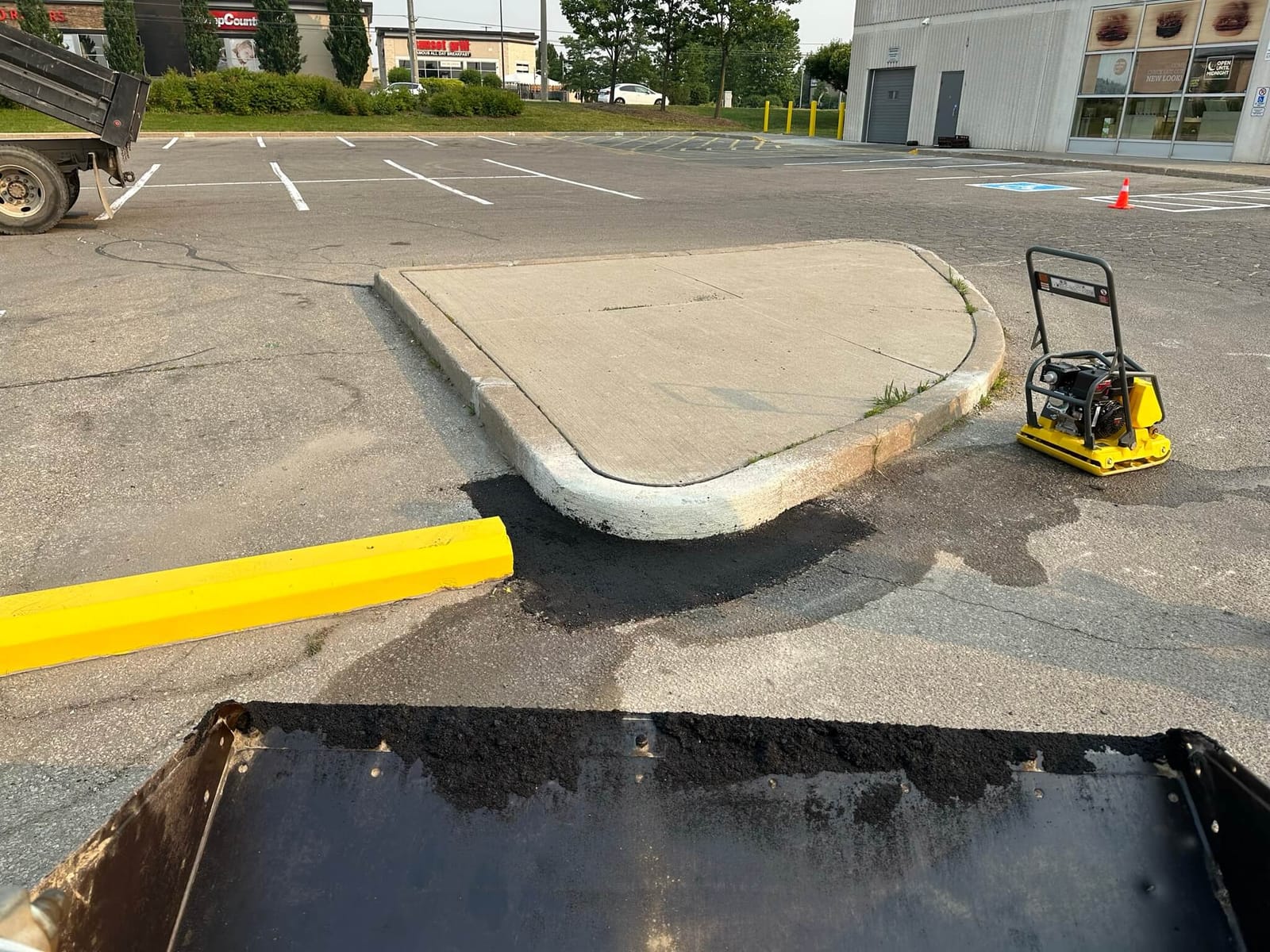
For isolated potholes, we saw cut the damaged area into a clean rectangle, remove all loose asphalt, and check the base below. If the base is soft, we dig it out, bring in new base rock, and compact it in layers with a plate compactor or small roller. Only then do we install hot mix asphalt, compact it, and seal edges so water cannot easily penetrate. This is much more durable than throwing in a cold patch and tamping it by hand.
For widespread cracking, we determine whether it is surface-level or structural. Alligator cracking (a pattern that looks like reptile skin) usually means the base has failed. In those areas we perform full-depth patching, which means cutting out the entire failed section down to the base, rebuilding the base, and installing new asphalt at the proper thickness for your traffic loads. For long linear cracks that are not moving, we clean them with compressed air, apply hot rubberized crack sealant, and then, if appropriate, follow with sealcoating to protect the surface.
If the top layer has oxidized and is raveling (rock coming loose) but the base is sound, we may recommend an asphalt overlay. This involves milling or grinding down high spots, cleaning the entire surface, applying a tack coat, then installing 1.5 to 2 inches of new hot mix asphalt and compacting it with a roller. Overlays are often a cost-effective way to add life to an existing lot without the cost of full reconstruction.
Full parking lot replacement and reconstruction
When a parking lot has extensive base failures, poor drainage, or repeated patches that keep failing, replacement is often the smarter long-term choice. Precision Asphalt Austin starts by removing the existing asphalt down to the base material. In many older Austin lots, we discover that the base is thin, inconsistent, or not compacted correctly, which explains years of recurring problems.
We then evaluate whether any of the existing base can be reused. If it is clean and stable, we may be able to regrade and recompact it, which can save money. If it is contaminated with clay, organic material, or soft spots, we haul it away and bring in new crushed limestone base. The base is installed in lifts, each compacted to the correct density using vibratory rollers. This step is critical to prevent future settling and potholes.
Next, we shape the base to create proper slopes. In Austin, we aim for at least 1 to 2 percent slope to direct water to inlets or the street. We also look at choke points where water has historically ponded and adjust grades so those areas shed water quickly. Poor drainage is one of the top reasons parking lots fail early, so we treat grading as a major part of "repair and replacement," not an afterthought.
Once the base and drainage are right, we install new asphalt at a thickness suited to your use. Light-duty parking (cars and light trucks) generally uses 2 to 3 inches of asphalt, while areas that see delivery trucks, dumpsters, or fire lanes may need 4 inches or more or even a reinforced section. After compaction, we allow the mat to cool, then add striping, signage, wheel stops, and ADA markings as needed. Our goal is for you to end up with a parking lot that functions better than the original and is easier to maintain.
What affects cost and timing for parking lot repair in Austin
No two parking lots in Austin cost the same to repair or replace, even if they appear similar in size. Precision Asphalt Austin is upfront about the main cost drivers so you can budget accurately and compare quotes fairly.
The largest factor is how much structural work is needed beneath the surface. Simple crack sealing and pothole repair are relatively inexpensive per square foot. Full-depth patching, base replacement, and overlays cost more but also extend the life of your lot much longer. We often phase work over several years for larger properties, starting with the worst sections and high-liability areas.
Access and phasing also affect price. If we can work in large, uninterrupted sections, production is faster and the cost per square foot is lower. If your business requires us to keep many spaces open at all times, we will schedule work in segments during off hours or weekends, which may add some labor but keeps your business operating.
Austin’s weather is another consideration. The best months for asphalt paving and major repairs are typically October through April, when temperatures are moderate and we are not fighting peak summer heat. We can and do work in the summer, but we have to manage the mix carefully because it cools very quickly. Rain can delay work, especially when we are replacing base material, since we cannot compact saturated subgrade properly. When we schedule your project, we look at current weather patterns and build in contingency so you know what to expect.
Materials choices, like adding a thicker asphalt section in heavy-use areas or including a sealcoat a few months after paving, can slightly increase upfront cost but often lower your long-term spend by delaying major repairs. We walk you through those options using life-cycle cost, not just the cheapest one-time number.
What Austin property owners should know before hiring
Choosing a contractor for parking lot repair and replacement is about more than the lowest bid. In Central Texas conditions, cutting corners on base work or drainage almost always leads to higher costs later. Precision Asphalt Austin encourages you to ask specific questions of any contractor you consider.
Ask how they evaluate the base and subgrade and whether full-depth patching is included where needed, not just surface patching. Request details on the asphalt mix design and thickness they will install in light-duty versus heavy-duty areas. Make sure they explain how they will handle transitions to existing concrete, like at sidewalks or dumpster pads, so you do not end up with trip hazards or abrupt bumps.
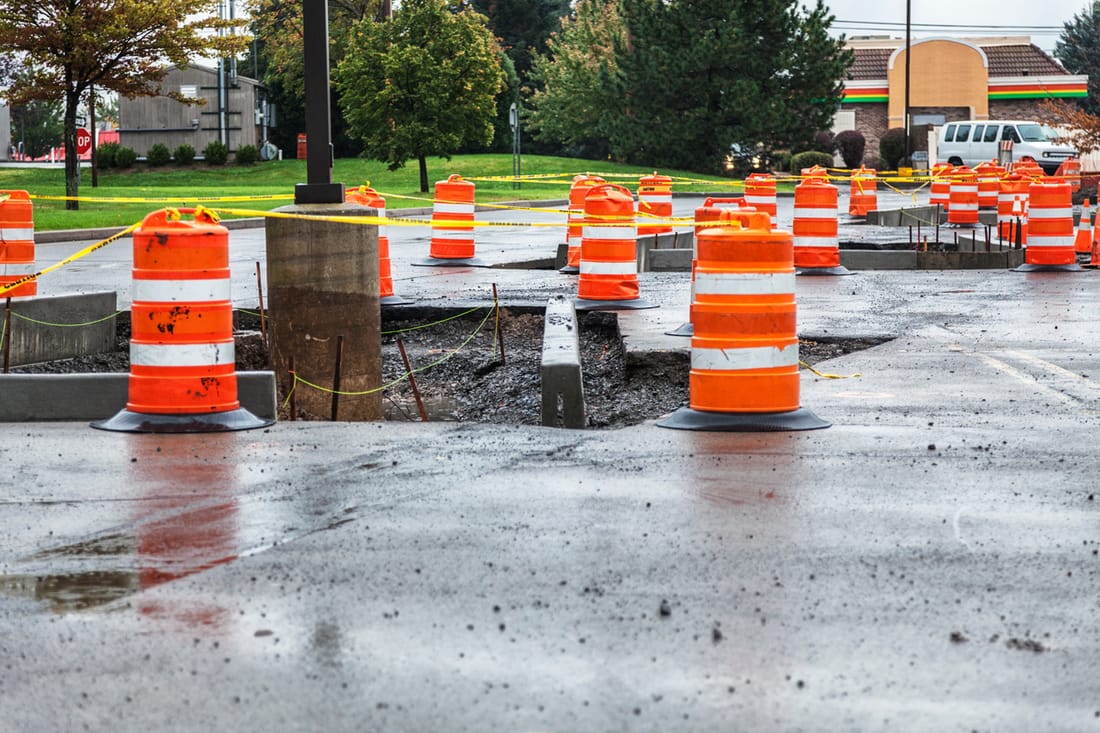
Licensing and insurance are basic, but you should also ask about experience with active properties. For retail centers, medical offices, or schools, it matters that the contractor can manage traffic control, signage, and safe pedestrian routes during construction. We routinely phase projects in Austin so customers can still reach front doors, deliveries can continue, and emergency access stays open.
Finally, look for a written scope that clearly separates repair, overlay, and full replacement areas, along with any striping, ADA upgrades, or sealcoating. A vague one-line quote like "repair parking lot" leaves too much room for misunderstandings. Our proposals include diagrams or marked-up site plans when needed, so you know exactly what is being done where. That transparency helps you compare our approach with other bids and choose the solution that fits your property, your budget, and the way your lot is actually used.