Home › Road, Street, and Municipal Paving
Precision Asphalt Austin performs road paving in Austin, TX for subdivisions, private streets, and municipal projects. Our team manages grading, base prep, paving, and traffic control for safe, efficient work. We build smooth, long lasting asphalt roads designed to handle expected traffic volumes and environmental conditions.
Precision Asphalt Austin provides professional road paving throughout Austin, TX, Texas and the surrounding area. Our licensed, insured crew delivers safe, clean, on-time work with a free estimate before anything begins. Call (737) 530-7711 or request your free quote.
Road, Street, and Municipal Paving in Austin, Built for Central Texas Traffic
If you manage roads, streets, or public facilities in Austin, you already know our pavement has a tough job. High summer heat, sudden storms, and heavy traffic from commuters and construction vehicles will punish any surface that is not designed correctly. Precision Asphalt Austin focuses on road paving that is tailored to how Austin streets are actually used, not just how they look on day one.
When we plan a road or municipal paving project, we start with use and load, not just square footage. We look at what types of vehicles will use the road, how often garbage trucks and delivery trucks pass through, whether there are bus routes, bike lanes, or emergency access routes, and how often the area floods or holds water. That information shapes everything that follows, from base thickness to asphalt mix design.
Our team works with neighborhood associations, property managers, general contractors, and cities in the Austin area. Whether you are rebuilding a small neighborhood street, tying new development into an existing city roadway, or improving access roads around a commercial complex, we show you the options, explain the tradeoffs in plain language, and help you choose a road paving solution that will last in Austin soil and weather.
How We Actually Build a Durable Road Surface
A quality road project in Austin is won or lost in the preparation. At Precision Asphalt Austin we follow a disciplined sequence so the surface holds up to years of traffic.
1. Site evaluation and design: We start by walking and driving the route, noting drainage patterns, existing utilities, soil type, and problem spots like rutting or reflective cracking. For new roads, we review your civil plans and often suggest refinements such as shifting inlets, adding valley gutters, or adjusting grades to keep water moving. In areas with expansive Central Texas clay, we may recommend soil stabilization with lime or cement.
2. Subgrade preparation: We remove vegetation, organic material, and unsuitable soils, then shape and compact the subgrade with rollers. We use proof rolling to identify soft spots that might later turn into potholes. Those areas get undercut, backfilled with select material, and recompacted so the entire stretch is uniform.
3. Base course installation: For most Austin road paving projects we use crushed limestone base, graded to meet TxDOT or project specifications. The base is placed in lifts, each lift is moisture conditioned and compacted to the required density, then laser graded or string-line graded to establish a smooth, consistent profile. This layer is what carries the load. Skimping here is one of the main ways cheap jobs fail.
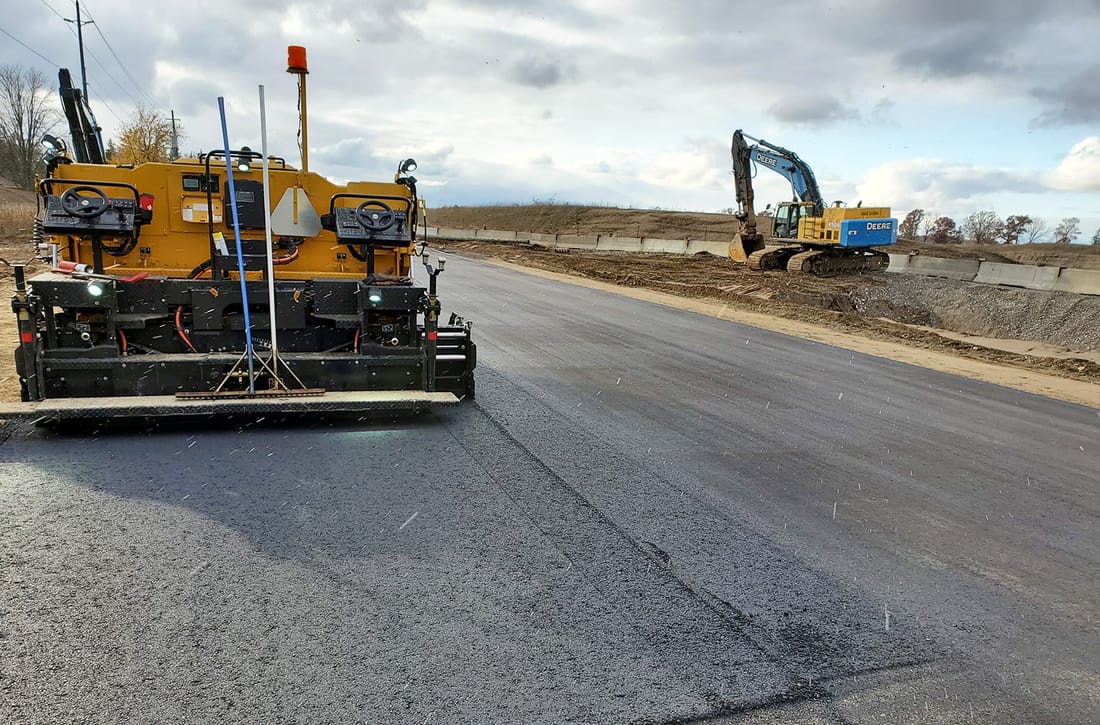
4. Tack coat and asphalt placement: Before we pave, we apply a tack coat so the asphalt bonds to the base or existing pavement. We then use a calibrated paver to place the asphalt mat at the exact specified thickness, followed by steel drum and pneumatic rollers to reach target compaction. On busier streets or intersections, we may use multiple asphalt lifts (binder course and surface course) to resist rutting.
5. Joints, tie-ins, and details: The weakest parts of a road are often the joints and transitions. We give special attention to matching existing pavement, cutting clean edges, and staggering joints away from wheel paths. Curbs, gutters, ADA ramps, and approaches are formed or matched so water does not pond and drivers do not feel a bump every time they enter or exit.
6. Final inspection and striping: Once the asphalt cools, we inspect the surface for segregation, roller marks, and drainage issues. Then, if striping is part of the scope, we apply thermoplastic or high quality traffic paint with glass beads for nighttime visibility.
Material Choices and Cost Drivers for Austin Road Paving
Not every road needs heavy duty highway specs, but every road needs the right design for its use. Precision Asphalt Austin explains material and design options in practical terms so you can balance budget and performance.
For local streets and private roads that handle residential traffic and light delivery trucks, a typical section might include 6 inches of compacted crushed limestone base with 2 to 3 inches of hot mix asphalt on top. For fire lanes, industrial drives, and streets with bus traffic, we often recommend thicker base and a two course asphalt system, for example 8 inches of base, 2 inches of binder, and 1.5 inches of surface mix.
Asphalt mix design matters in our climate. Austin heat can soften softer mixes, which leads to rutting at intersections and bus stops. We generally specify mixes that perform well at high temperatures, sometimes with polymer modification at heavy braking zones. In shaded, slow speed areas, we may use a different aggregate blend to improve skid resistance when the surface is wet.
Several factors drive the cost of a road paving project here:
• Existing conditions: Failing base, poor subgrade, or extensive tree root damage require more excavation and reconstruction than a simple mill and overlay.
• Section thickness and materials: More base or extra asphalt lifts increase cost up front, but often reduce long term patching and overlay expenses.
• Access and phasing: Work on a busy connector or school route often needs night work or phased closures with traffic control, which affects labor and equipment time.
• Drainage improvements: Adding or adjusting curb and gutter, inlets, and valley pans can significantly improve pavement life in Austin’s heavy storms, but they also add to project scope.
We walk you through a detailed proposal that shows where the money goes, and we offer options so you can decide whether to invest more in structure now or plan for more frequent maintenance later.
Common Road Problems in Austin and How We Address Them
Roads in and around Austin tend to fail in predictable ways because of our soil and weather. Recognizing these patterns helps Precision Asphalt Austin recommend the right fix instead of a quick patch that simply hides the issue.
Rutting and shoving at intersections: High summer temperatures combined with braking and turning traffic can push softer asphalt mixes around. When we see this, we typically remove the distressed area to a sufficient depth, install a stiffer binder course, and use a rut resistant surface mix. Sometimes we also widen the reinforced area so the wheel paths are fully supported.
Longitudinal and alligator cracking: Long cracks along the lane or cracked patterns like an alligator’s back are often signs of base or subgrade problems, not just surface aging. In these cases, we cut out failed sections, repair the base, and only then replace the asphalt. Simply overlaying over broken base will almost always allow the cracks to reflect back through within a year or two.
Drainage related failures: Many Austin streets see damage where water repeatedly crosses or stands. You might notice potholes forming along the edge where water leaves a driveway, or at low spots that always stay damp. We address this by reshaping the road profile, adjusting curb and gutter, or adding small valley gutters and inlets so water has a defined path away from the pavement.
Utility trench settlement: Roads with repeated utility cuts often develop dips and bumps. We work with utility contractors and municipalities to specify proper backfill materials and compaction methods, sometimes adding geogrid or cement treated base over trenches before paving. On existing dips, we mill and relevel the area rather than just filling the depression, so the ride quality is restored and water sheds properly.
By focusing on the root cause, we help streets and municipal pavements around Austin last longer and stay safer between major rehabilitation cycles.
Planning, Scheduling, and Working Around Austin Traffic
Road paving is as much about logistics as it is about asphalt. Precision Asphalt Austin helps you plan projects so they are less disruptive to residents, customers, and commuters.
On municipal and neighborhood streets, we typically recommend major paving work in the cooler, drier months in Central Texas, usually from October through early May. During this window, asphalt compacts better, workers can stay on the job longer each day, and afternoon thunderstorms are less frequent. Summer paving is absolutely possible, but it often requires earlier start times and more attention to compaction temperatures.
We coordinate traffic control in line with local requirements, which can include flaggers, temporary signage, and detours. For schools, hospitals, and busy commercial corridors, we can phase work so access is maintained at all times, scheduling the loudest or most disruptive operations during off peak hours or weekends.
Before any work starts, we provide residents or tenants with a clear schedule, parking instructions, and contact information. For multi day projects, we sequence work so at the end of each day there are clean edges, safe transitions, and no open excavations left in travel lanes.
If your project involves city right of way in Austin, we can help you interpret typical city or county paving standards and coordinate our crews to meet inspection milestones. For private streets and access roads, we can either follow your engineer’s plans or suggest practical sections based on similar projects we have built nearby.
Whether you are planning a small connector road in a new subdivision or a multi phase improvement for an existing street network, Precision Asphalt Austin is set up to evaluate your needs, design a paving approach that fits your budget and your traffic, and execute the work with minimal headaches.